Cepa's Call: Return Of The Forest
ROLE
Lead Game Designer & Level- / Narrativ- / Sound Designer
DESCRIPTION
Cepa’s Call is a 3D Twin-Stick-Shooter, in a cartoony low poly style, for PC.
The player has to fight through a linear stage system and against strategically placed evil robots, while experiencing the story of a young nature god's first mission.
Cepas Call was a first-semester student project, which was developed within 10 weeks.
GAME DESIGN
My main task as lead designer was to take the ideas of our team, combine as well as define them, and document them in my "Game Design Document".
Our goal for this game was to develop a short, simple game with a cute story and a hidden message.
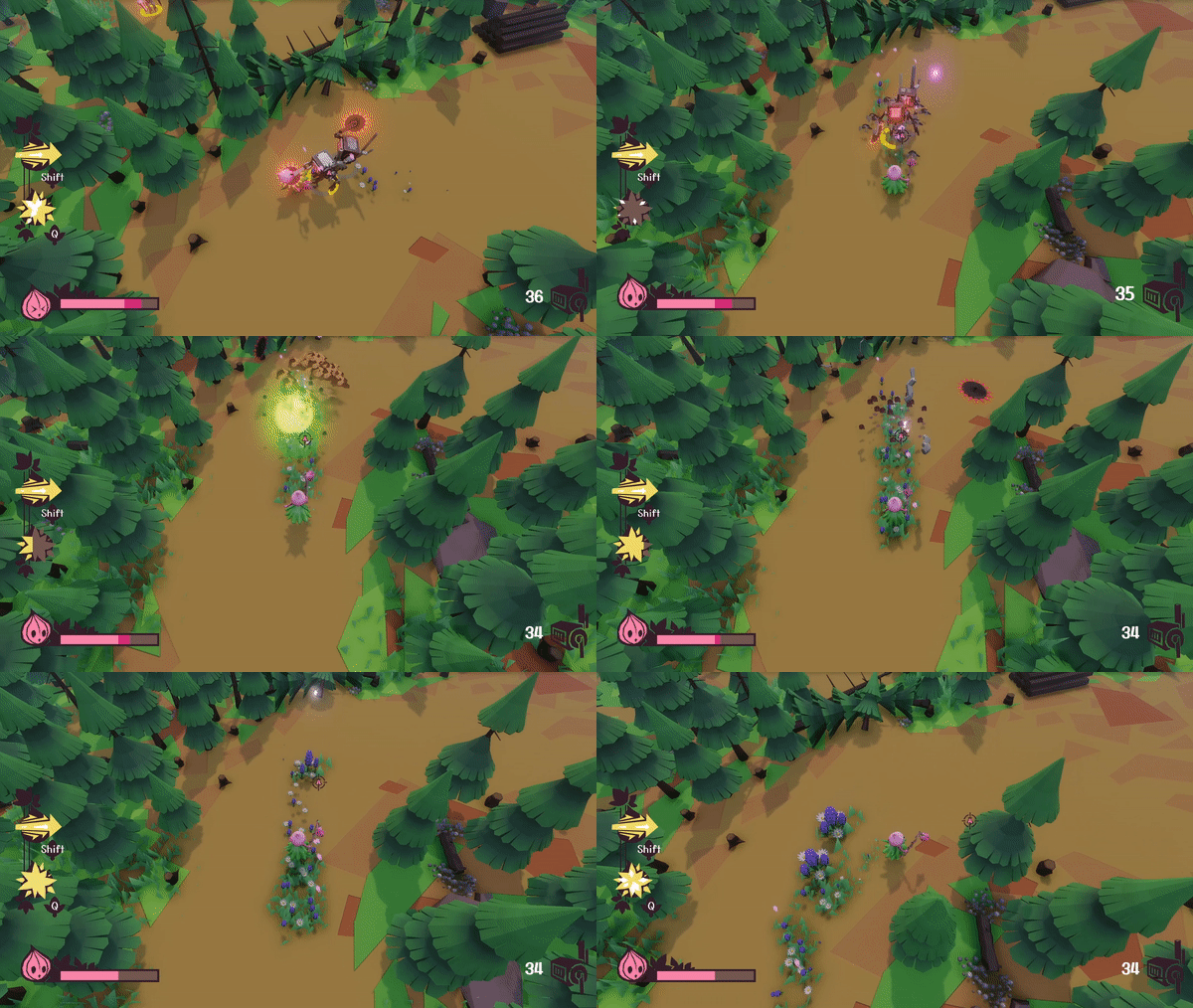
Player Character:
Melee Enemy:
Range Enemy:
-
the stronger enemy
-
ranged attack
-
slower movement
-
bigger amount of health
-
simple WASD movement
-
dash ability
-
magic-shot attack
-
magical sphere (grenade)
-
the weaker enemy
-
melee attack
-
fast movement
-
small amount of health


I designed many small features throughout the production of this game,
for example: when and where dialogues will be triggered, etc.
But one of my most important design tasks was the enemy attack system.
My co-designer and I came up with a 2 radius system, inspired by many MMORPG games.
The first radius triggers the enemy and makes them follow the player.
Once the player enters the second radius the enemy is able to attack them.
This system was fun and easy to balance and since I was able to overlap the radiuses of different enemies it also helped set the pacing and added a fast-paced feeling to the game.
PLAYTESTING
LEVEL DESIGN
As level designer I helped design the overall level structure and layout, placed and balanced the enemies, and tested as well as tweaked the game pacing.
While placing the enemies, I wanted to make sure that the player won't be able to pick only one robot at a time- but would automatically trigger at least one more to make the gameplay more challenging.
We also chose a linear level design to make the pacing easier and more clear.


I also helped design the tutorial stage, designed the signs with our controls on them, and created the drawings on them.
We wanted the tutorial to feel like a small safe space, a place where the player could explore and test the controls without feeling rushed.
It was also important to us to show the player how to move instead of just telling them which button to hit.
NARRATIVE DESIGN
Narrative Design
Narrative Design
Narrative Design
As the main narrative designer, I helped my team define the story as well as the world-building of our game.
I also wrote all the texts and dialogues and helped brainstorm as well as create the intro and end-cutscene.

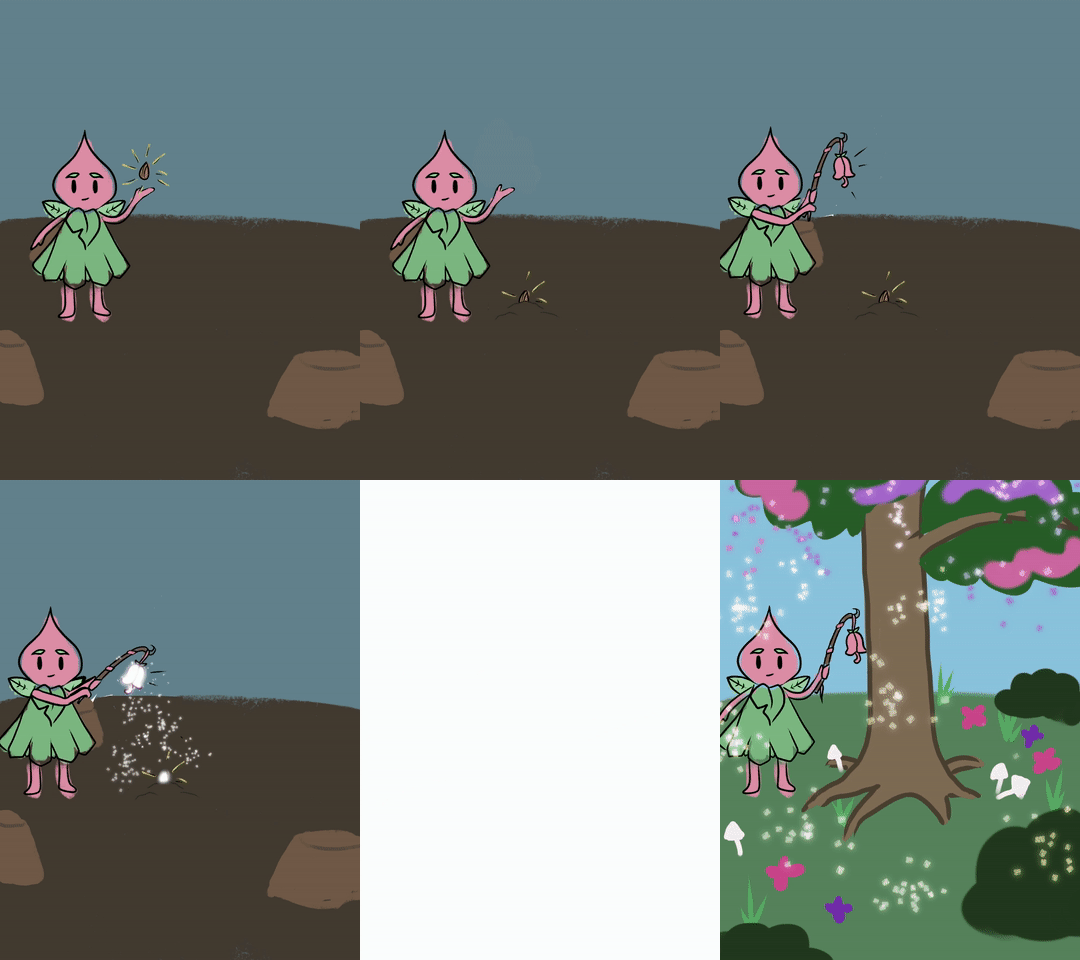
One of the most important things I learned during this project, was that visualizing your ideas in drawings or small animations really helps explain your vision.
I made this little animation in 30 minutes and it immediately helped solve one of our biggest questions, which was how to design our end cutscene without making it too complicated or creating too much work for our artists.
SOUND DESIGN
As the sound designer, it was my task to think about all the things that needed more feedback as well as create and implement them.
It was important to me that the in-game sounds supported the ambient and overall mood of our game, without being too obnoxious.
To ensure this I even decided to record Cepa's voice myself and make it as fitting as I could.
I also made sure to only use and create sounds with publicly available SFX with the creative commons 0 license.

PLAYTESTING
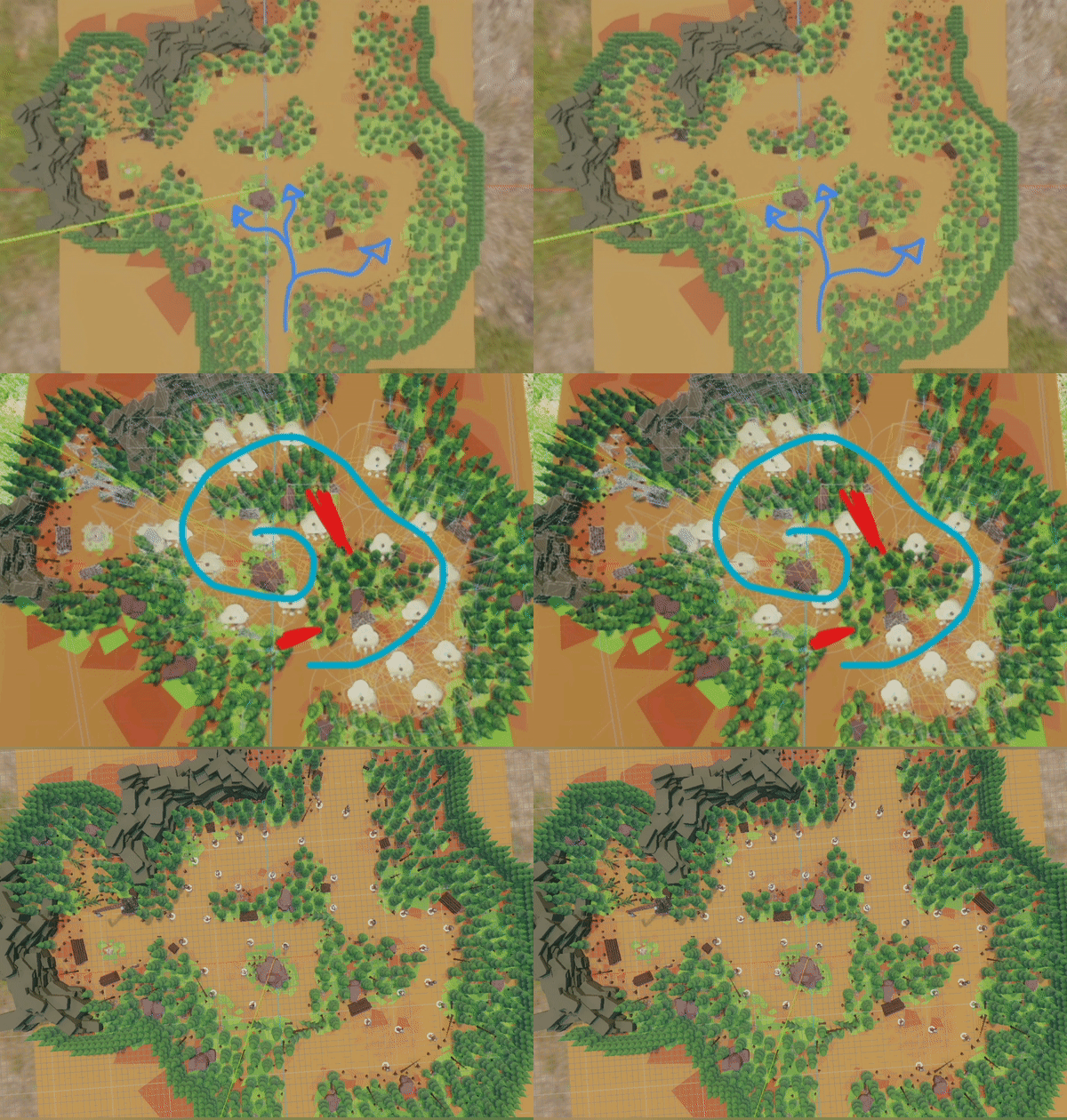
Through the internal as well as external playtests we noticed, that the pacing of our first stage felt a little off.
We wanted to give the player multiple paths to choose from but this made placing the enemies and creating an increasing difficulty very hard.
We also noticed that our playtester ALWAYS chose the path to the right.
So having multiple paths didn't seem necessary from a player's view and only meant more work for us designers.
Naturally, the easiest idea that came to our mind was making the stage linear and only giving the player one path to follow.
This made balancing and pacing the stage much easier, but also made the game feel more complete and more structured.