Sasya
ROLE
Game & Level Designer
DESCRIPTION
“Sasya” is a 3D Bullet Hell Shooter in which fast reactions and pattern recognition are key.
The player has to fight against one challenging boss enemy with multiple phases, who gains new patterns after each defeat.
Sasya was a second semester student project and was developed within 10 weeks.
Player Character:
Boss Enemy:
-
simple WASD movement
-
aim follows the cursor
-
only one shooting attack
-
restores life with each new phase
-
static for the first phase (tutorial phase)
-
can move to 3 different pre-determined spots in the arena
-
always faces the player
-
can shoot 3 different kinds of bullets (destroyable, undestroyable & homing bullets)
-
gains new patterns and one new environmental attack each round
-
health increases with each phase
GAME DESIGN
The gameplay in Sasya revolves around one challenging boss fight, which gets progressively harder with each passing phase.
Our goal was to set the focus on our enemy and make the player, in contrast, as simple as possible.
In order to design and develop such a detailed enemy, it was necessary for me to write an elaborate "Boss Design Document", with all of his attacks, patterns, and various states throughout the game.
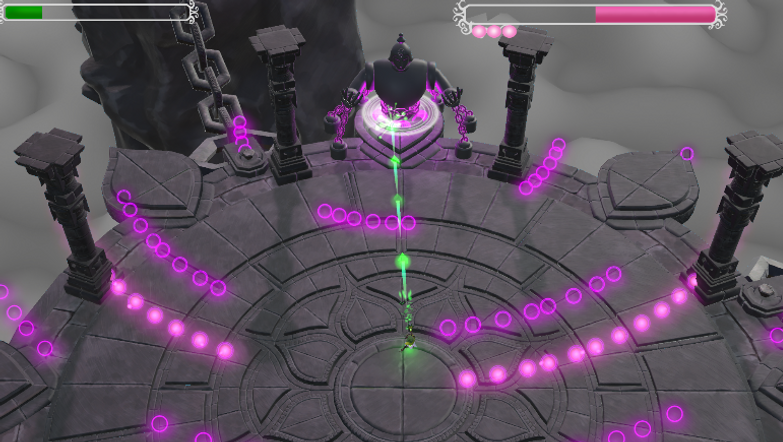
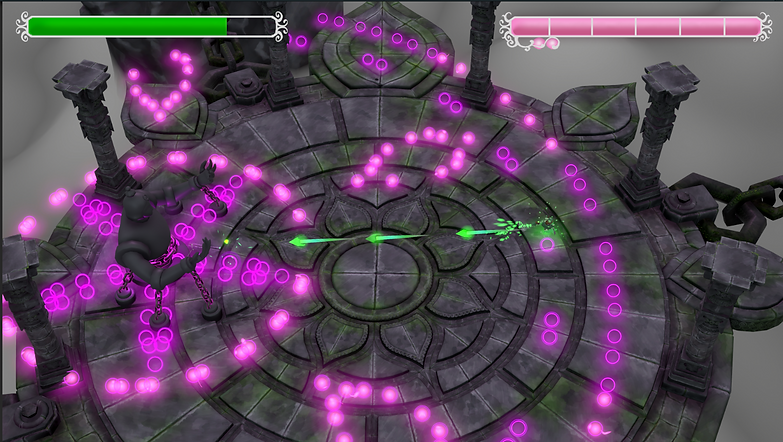
I also spend a lot of time working together with our talented artists to design the arena, find the most comfortable camera perspective as well as the best scaling for our assets.
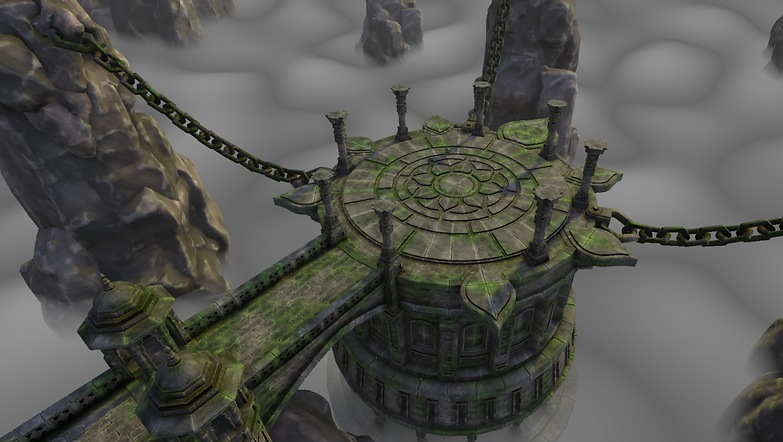
We decided on making the arena round and added some flower details in form of stone pedestals to the outer edge, to support the theme of our game but also compliment the bullet patterns.
At the end, I even added moss details with vertex color to our tower in order to make the environmental transformation during the end-cutscene really stand out.
LEVEL DESIGN
My main task as level designer during this project, was to create interesting bullet-hell-patterns that would be fun to dodge, destroy and navigate through.
I created 3 different phases with a total of 9 unique patterns and 2 environmental attacks.
The nature theme played a big role in this game, so I made sure to incorporate it in my patterns and let mandalas and flower shapes inspire me.
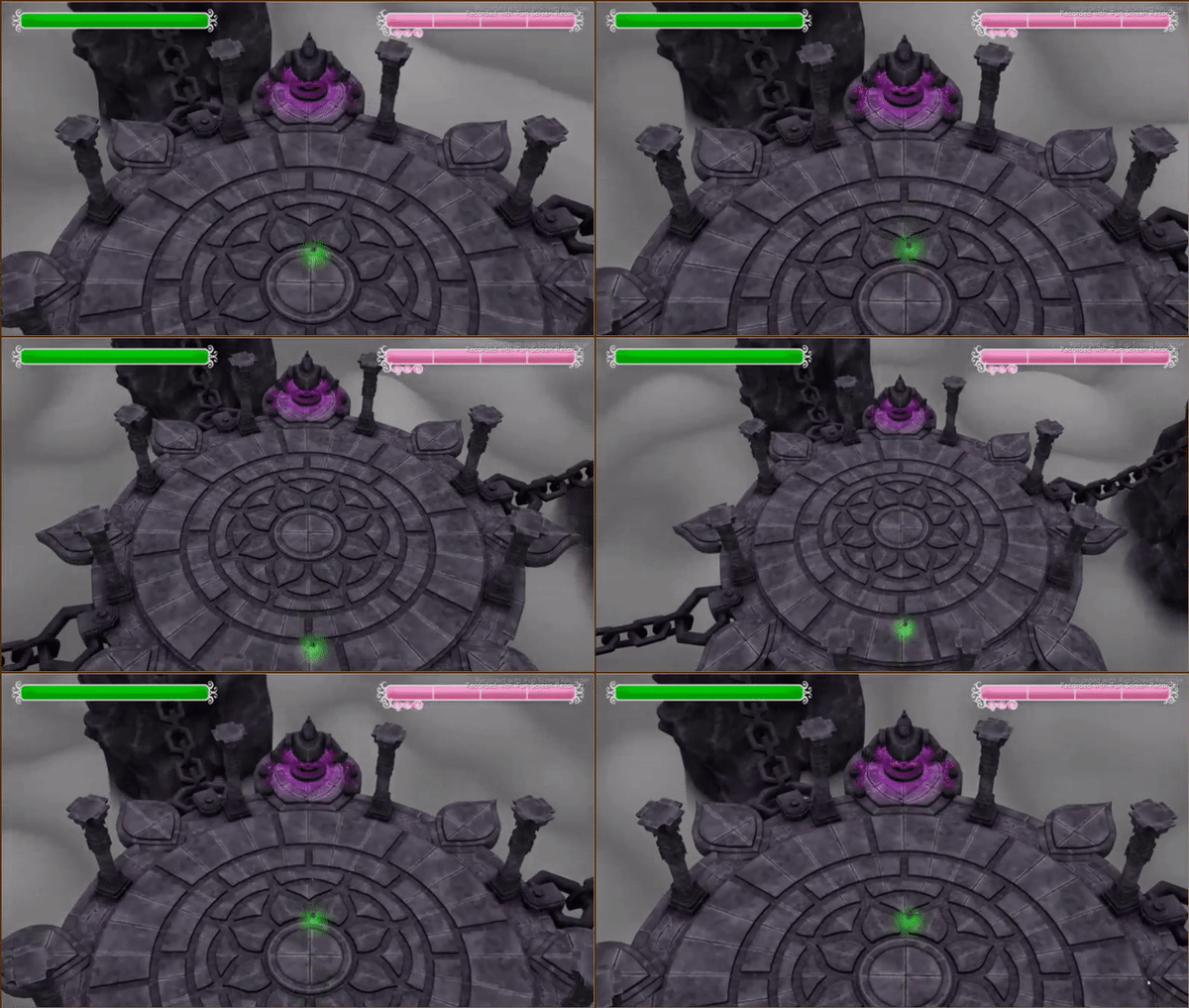
For the camera, I decided to use the cinemachine and its "target group" option.
I wanted to make sure that the player will always be able to see their enemy, but also didn't want to set the camera too far away.
This would've made the game too easy and also took away this stressed and rushed feeling we wanted to create while playing.
PLAYTESTING
Analyzing our internal and external playtests was another big task for us game designers.
We mainly used the internal playtests for analyzing and tweaking our mechanics (fire rate, player/boss movement speed, etc).
But also for bug testing as well as overall gameplay testing.
However, at one point the difficulty of our game started to seem way too easy.
But we weren't entirely sure if it was the game itself or the fact that we were just getting too good at it.
So to determine that we needed to do some external testing.
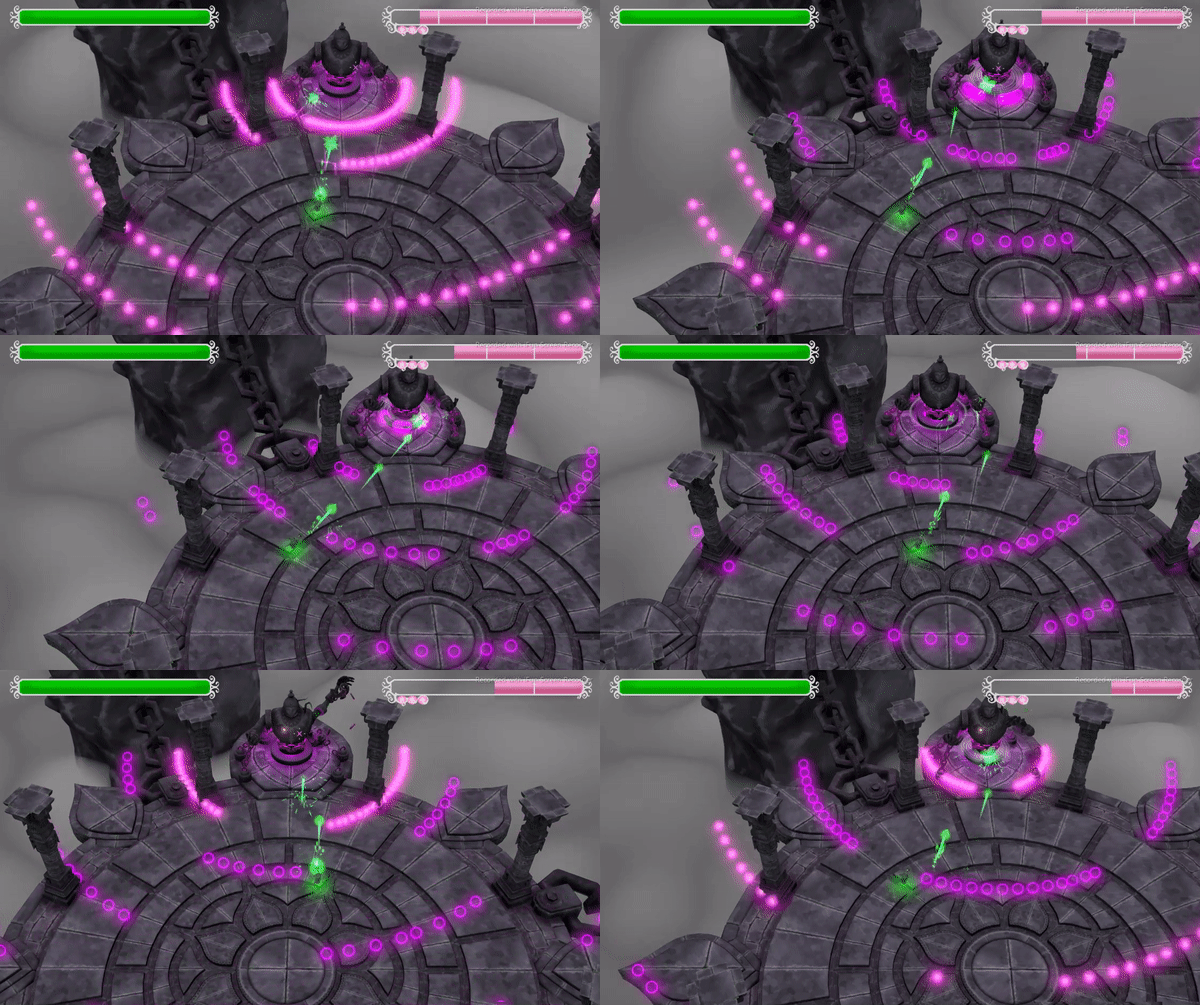
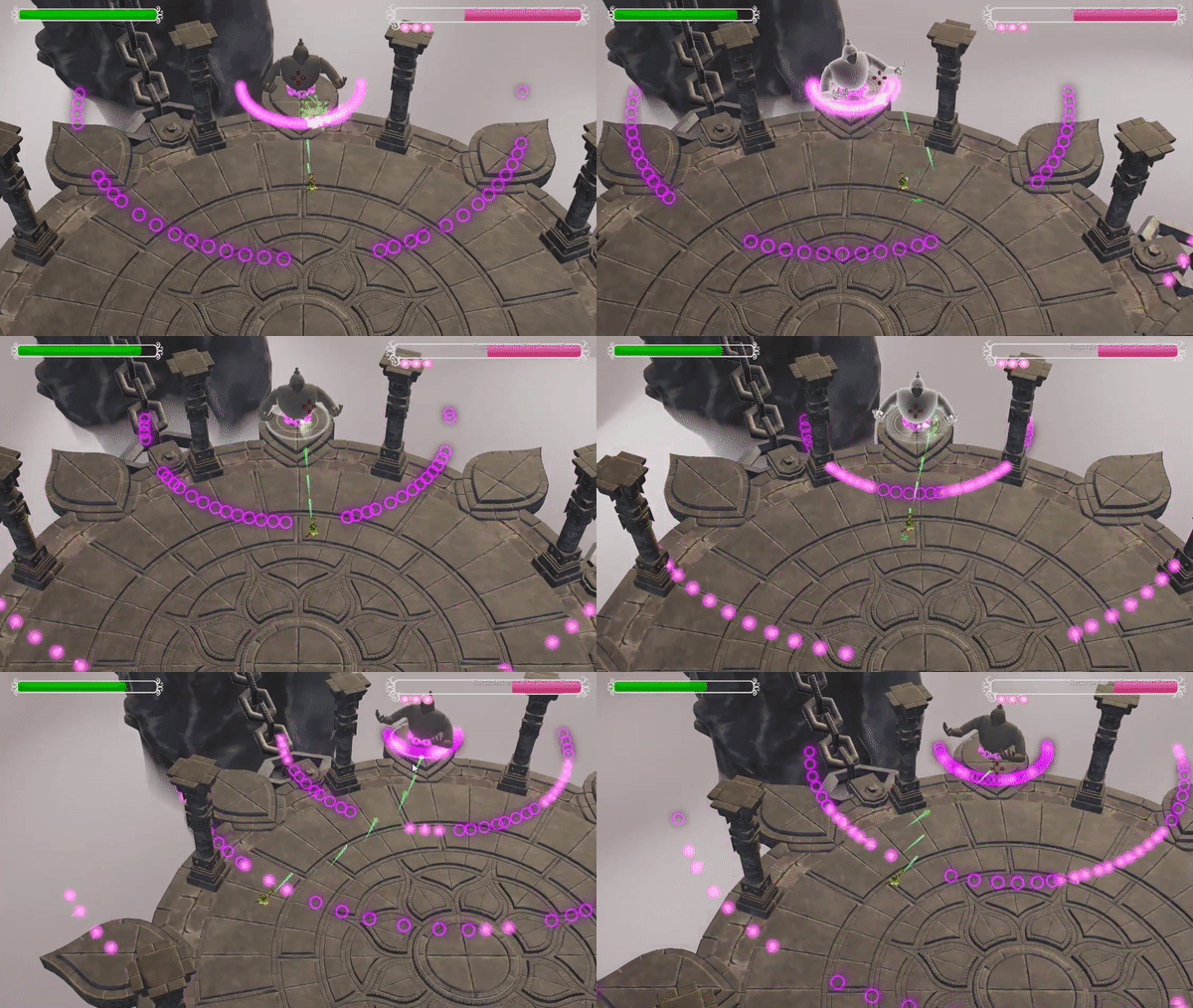
The external playtests revealed that Sasya was too hard for the majority of players and that especially the "tutorial" was unclear, too challenging, and too fast.
But even though Sasya was too difficult to beat, the players also agreed the game was fun and they tried to beat it over and over again without us requesting them to do so.
Fixing the difficulty was easy, I made sure that the difference between the two bullet types is more clear and easier to understand, I also timed as well as changed the design of the three tutorial patterns.
The playtests after this tweak confirmed that the game was now fun and challenging- but that it wasn't frustratingly hard anymore.
Additional Tasks
During this project, I also helped set up and fill the backlog, wrote task lists for our engineers, and shared the responsibility of organizing our team.